Smile Point Dental

Categories
Dental care

What Does a Pediatric Dentist Do and When Should Your Child See One?

At first, a pediatric dentist is not really on most parents’ minds. It comes up later, when the first tooth shows or brushing turns into a struggle. Early on, it is easy to assume any dentist can handle it. That thought tends to come up quite often.

But that assumption doesn’t really hold once you see how different kids can be in a dental chair. Some are curious. Some are nervous.

Some just refuse to open their mouth, no matter how gently you ask.
That’s usually where the idea of “what is a pediatric dentist” starts to make more sense. It’s not just about smaller teeth. It’s about how everything around those teeth is handled.

What Is A Pediatric Dentist? Why Is It Not The Same As A General Dentist

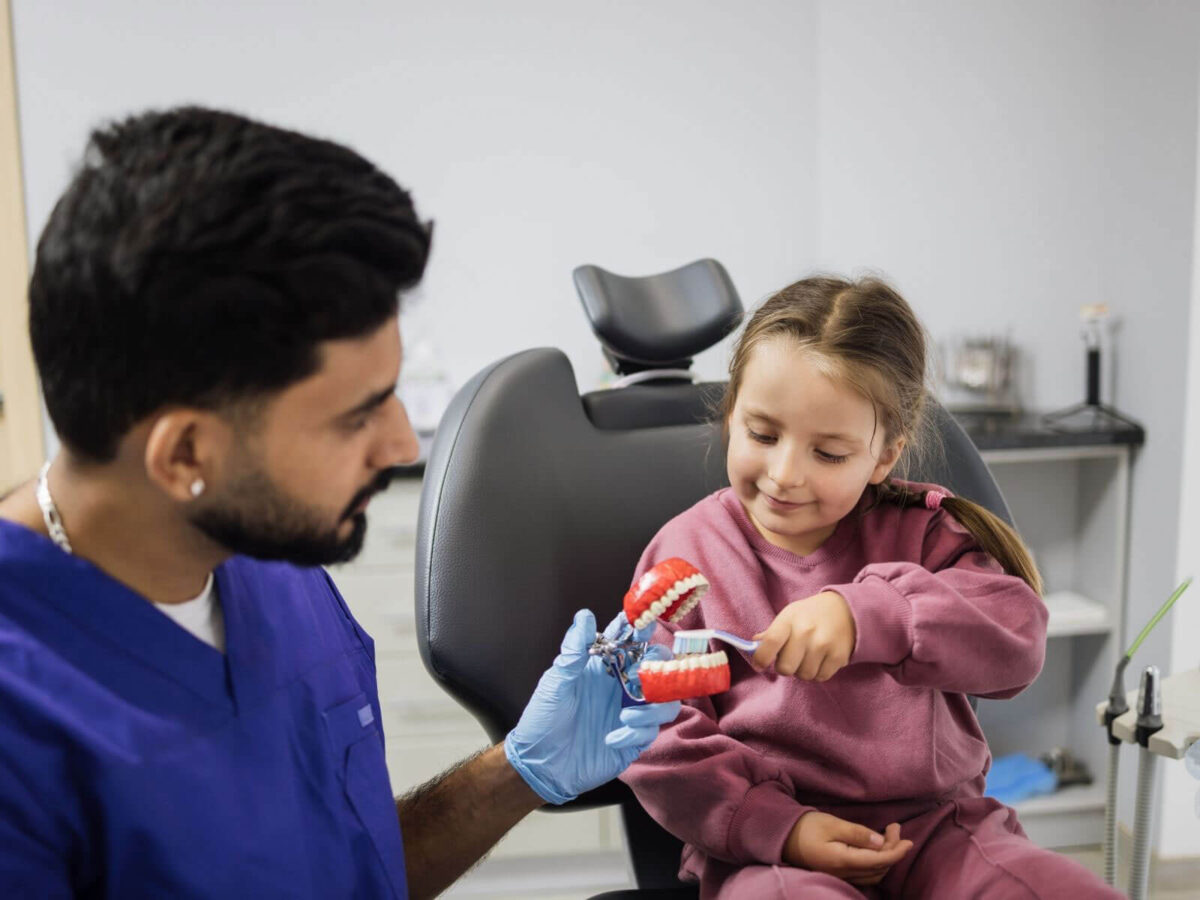
A pediatric dentist is trained to treat children, though the work is not limited to procedures alone. With kids, it can shift pretty quickly. They might be okay at first, then suddenly uneasy or distracted. So the approach is changed in a way that helps them stay comfortable during the visit.

Pediatric dentists usually do not force things. They adjust based on how the child responds. That can mean changing how they speak, explain things, or move through the visit. It is not always done the same way.

The American Academy of Pediatric Dentistry also points out that its role includes both oral development and behavior management.
That mix is really what explains what is a pediatric dentist. It is not only about treatment. It is also about how the child experiences the visit.

Why Pediatric Dental Care Starts Earlier Than You Think

It is common to think baby teeth do not need much attention. They fall out, so it may not feel urgent at first. But that idea does not always stand once you look at things a little more closely.

Baby teeth help show permanent teeth where to come in. They also support how the mouth develops over time. If something goes off early, it does not always stay contained. It can show up later in the form of alignment issues, and sometimes even affect speech.

The CDC has found that tooth decay is one of the more common issues seen in children. That alone says a lot. So it is not just about what is happening right now. Dentists also look at how those early years may affect things over time.

When That First Dental Visit Usually Happens

This is where parents often hesitate a little. It can feel too early. One tooth, maybe two. It does not always feel like enough for a dental visit. Still, most recommendations suggest going by the first birthday or when the first tooth shows up. Not because something is wrong. Just to get familiar with the process.

The first visit is usually simple. There’s not much treatment involved. It’s more of a check, a quick look, and some guidance for parents. It also helps make sure the child does not start linking dental visits with discomfort later on. That early step shapes how future visits feel.

What the First Visit Is Usually Like

It does not really feel like a regular appointment. The first visit is usually slower, a bit more open. The dentist may not start right away. They might just let the child get comfortable first. Sometimes things move quickly, sometimes they do not. It depends on the child in that moment. They still check the teeth, the gums, how everything is coming along, which is where what is a pediatric dentist starts to make more sense.

Much of the visit is actually a conversation with the parent. Brushing, feeding habits, thumb sucking, these things come up along the way. It is not really about doing much. It is more about understanding what is happening and what to keep in mind moving forward.

How Pediatric Dentists Work With Fear

This part is easy to overlook until you actually see it happen. Children don’t always explain what they’re feeling. They show it. Sometimes it’s hesitation. Sometimes it’s full resistance. Pediatric dentists are trained to read those moments. They don’t rush through them. They adjust.

They might slow down or change the tone. At times, they make it seem like a small game. Kids don’t even notice what is really going on. That’s actually how pediatric dental care works. It adapts instead of forcing the process.

What Kind Of Treatments Do Pediatric Dentists Provide

The treatments themselves aren’t completely different from general dentistry, but the way they’re delivered is. Cleanings, fluoride treatments, fillings… those are all part of it. But there’s also a focus on habits.

Things like extended bottle use or thumb sucking can affect how teeth come in. Pediatric dentists tend to step in early, before these turn into larger issues.

They also keep an eye on how teeth are coming in. If something looks slightly off, they guide parents on what to watch for rather than jumping straight into treatment. It’s more of a gradual approach.

How Often Should Children Visit A Pediatric Dentist

Most children are usually brought in every six months. That is what many parents hear first. Still, it is not something that stays the same for everyone. Some children may need to come in a bit more often. It really depends on how things are going with their teeth. If cavities start showing up more easily or there are early gum concerns, visits may be planned sooner.

The CDC reports on children’s oral health show that about half of children aged 6 to 9 have had cavities at some point. That alone gives some context. Regular checkups are not just routine. They help catch small issues early.

So even though the timing sounds routine, it is not completely fixed. Dentists adjust it depending on what they see over time and how the child’s oral health is changing.

What Signs Mean Your Child Should Visit Sooner

Sometimes the signs are obvious. Pain, swelling, visible damage. But often, they’re quieter. A child is avoiding certain foods.

Complaining about sensitivity without explaining it clearly. Even changes in how they chew. It may not feel urgent, though it usually means something has shifted a bit. And catching that early tends to make things simpler.

How Pediatric Dental Care Shapes Long-Term Habits

This part doesn’t show up immediately. But it builds over time. Children who feel comfortable at the dentist tend to carry that into adulthood. They don’t avoid visits. They don’t wait until something hurts. They also pick up small habits early. Brushing properly.

Paying attention to what feels different. So understanding “what is a pediatric dentist” isn’t just about early care. It quietly connects to long-term behavior.

FAQs

1. Pediatric dentist- What is it exactly?

It usually means a dentist who works specifically with children. The care is not just about teeth. It also involves how the visit is handled, since children respond differently from adults.

2. When should a child first visit?

It is often suggested around the first birthday or when the first tooth appears. It is more about getting familiar than fixing anything.

3. How often are visits needed?

For many children, every six months works well. Still, it can change depending on how their teeth are doing.

4. Do baby teeth really need treatment?

They do. Even though they fall out, they still affect how things develop later.

Conclusion

Understanding “what is a pediatric dentist” becomes clearer when you see how different children’s dental needs actually are.
It’s not just smaller teeth or simpler care. It’s a different way of approaching the entire experience.

If you have been considering it, you could start with a simple visit. Nothing too involved. Just getting your child used to the space can help more than expected. Over time, that first step can make future visits feel less scary for your kid.

Categories
Dental care

Same-Day Tooth Extraction And Implant: What Patients Need To Know

Losing a tooth is never something people plan for. It usually comes up suddenly. Pain, damage, or something that just can’t be fixed anymore. And then comes the next question, almost immediately. What now?

For a long time, replacing a tooth meant waiting. Extraction first, then healing, then an implant months later. That gap in between… it wasn’t always easy to deal with.

That’s why the idea of same-day tooth extraction and implant has started getting attention. Everything happens in one visit. It sounds quick. Maybe even too quick. But there’s more to it than just saving time.

What Is Same Day Tooth Extraction And Implant

It sounds pretty simple at first. The tooth comes out, the implant goes in, all in the same visit. There is no gap in between or an extra procedure later. Even so, it is not just a simple switch. There are a few things that make it more involved than expected.

Before anything moves forward, the dentist looks at a few things carefully. The bone has to be strong enough to hold the implant. Any infection needs to be under control. Stability matters too, especially right after placement. These factors cannot be ignored.

When everything lines up, the procedure can go ahead in one sitting. That is what people usually mean by implant, same-day as extraction. It is immediate placement, but only when the situation allows it and the conditions are right.

Why Do Patients Consider Same-Day Extraction And Implant

Most people think about the time first. Waiting months between removal and implant placement can feel longer than it sounds. It becomes more obvious when the missing tooth shows while talking or smiling. Day to day, it is not always easy to deal with.

Then there is the convenience side. Fewer appointments can make the whole process feel easier to manage. Having fewer procedures to deal with usually keeps things simpler.

There is also some concern about bone changes after a tooth is removed. Placing an implant right away may help reduce that to some extent. It does not prevent it completely, but it can help in certain situations.

Because of that, many people end up looking into same-day extraction and implant to skip that long waiting period.

When Is Same-Day Tooth Extraction And Implant Possible

This is where things slow down a bit. Not every case works for this. The bone needs enough strength to keep the implant stable. If it’s too thin or weakened, placing an implant immediately may not be stable. According to the National Institute of Dental and Craniofacial Research, bone health plays a major role in how well dental implants integrate over time.

Infection is another factor. If there is an infection around the tooth, dentists tend to take care of that first. The implant usually comes later.

Gum condition also matters. Healthy gums support better healing, which is important for implant success.

It might sound simple when you hear implant same day as extraction, but it really comes down to what is happening beneath the surface.

What Happens During The Procedure

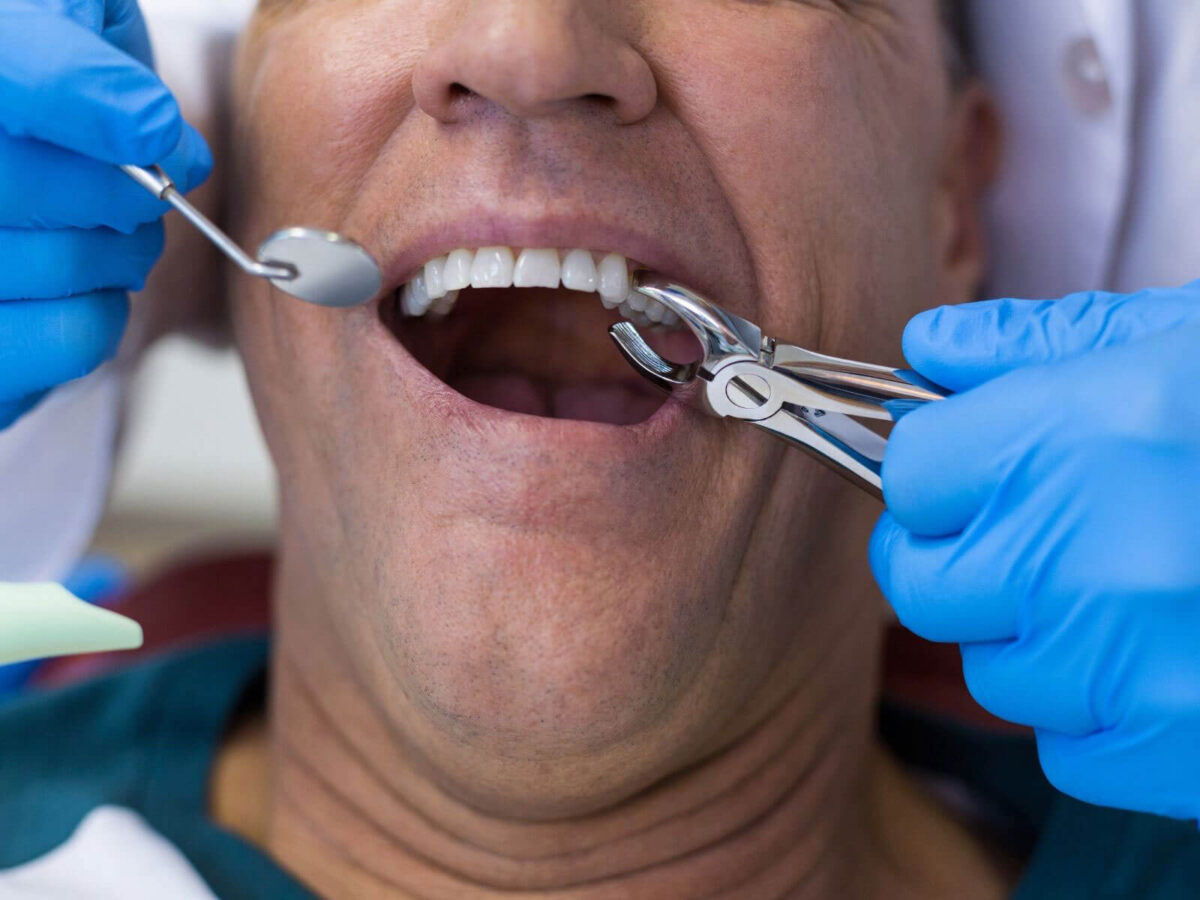
Even though it happens in one visit, the process still moves in steps. It does not all feel like one single action. First, the tooth is removed carefully. Dentists try to save as much of the bone as they can at this stage.

Now, it’s time for the implant. It is placed right in the spot the tooth used to be. This part needs attention because the implant has to stay stable right from the start. If it is not secure enough, things can change later.

Sometimes, a temporary crown is added on the same day. Other times, it is just left for a while so it can heal before anything is placed. It depends on how things are looking then. The idea is to allow stability to develop without putting too much pressure on the implant too early.

Does Same-Day Extraction And Implant Hurt More

People wonder about this. There is no pain during the procedure since local anesthesia is used. After it is over, though, some discomfort can show up. It is usually along the lines of a regular extraction.

Some patients feel that doing both steps together does not make recovery more difficult. It becomes one healing period instead of two separate ones.

Even then, recovery can vary. It depends on how complex the extraction was and how your body reacts during the healing process over time after the procedure is done.

What Are The Benefits of Same-Day Tooth Extraction And Implant

There are a few clear advantages, which is why this option exists in the first place. It reduces the number of surgical visits. Instead of spacing things out over months, much of the process is handled in one go. It can also help maintain the natural shape of the gums and bone, especially when done carefully.

Then there’s the psychological side of it. Not having a visible gap, even temporarily, can make a difference in how people feel day to day. That’s often why patients ask about same-day extraction and implant early in the conversation.

What Are The Risks

It sounds simple enough at first. But it is not always like that. If the implant is not stable early on, things do not always heal the way you expect. That can create problems later and sometimes means more treatment.

There is also more thought involved than it might look from the outside. Dentists usually take their time to check things before deciding.

The American Academy of Implant Dentistry has pointed out that choosing the right case matters a lot. Because of that, same-day tooth extraction and implant is not something done casually. It depends on whether everything lines up properly.

How Healing Time Usually Works

The implant can be placed in the same visit, but healing does not speed up. The bone still needs time to bond with it, often a few months. That part is called osseointegration. During this phase, the implant becomes stable enough to hold a crown. So the procedure may feel quick, but recovery does not really work that way.

What Dentists Check Before Moving Ahead

It usually depends on a few things together. Bone strength matters, gum condition too, and overall oral health also comes into play. Dentists may also look at scans to get a clearer idea before deciding.
Your general health matters too. Conditions that affect healing can influence whether immediate placement is recommended. So the decision isn’t rushed, even if the procedure itself happens quickly.

FAQs

1. Can an implant, same-day as extraction, work for everyone?

No, it depends. Bone health matters, infection matters, and overall oral condition play a role too.

2. Is same-day extraction and implant safe?

Yes, when done in the right conditions with proper planning.

3. How long does recovery take?

Initial healing takes a few days. Full integration, however, can take several months.

4. Will I get a tooth the same day?

In some cases, a temporary crown is placed, but it depends on stability.

Conclusion

Same-day tooth extraction and implant is often talked about as a quicker option. That part is true to an extent. Still, speed is not the main point here. It comes down to whether things are suitable for it to work the way it should.

What matters more is whether the situation actually supports it. Things like bone condition, healing ability, and overall oral health all come into play. When those line up, it can work well. If not, a slower approach usually makes more sense in the long run.

Call To Action

Thinking about this option? It helps to talk it through with your dentist. A proper check can give you a clearer idea of whether it actually suits your situation. You can also get to know what to expect moving forward.

Categories
Dental care

How Many Times a Year Should You See the Dentist?

For a lot of people, the idea of seeing the dentist twice a year just sticks over time. It just becomes something people follow. Not much thought goes into it. But if you really think about it, it doesn’t always line up with real life. Some people follow that exactly. Others don’t go for a year or more and still feel fine, at least on the surface.

That’s where the confusion starts. Because the answer to “how often should you go to the dentist” isn’t as fixed as it sounds. It shifts, sometimes quietly, depending on things most people don’t really think about day to day.

What Does How Often Should You Go To The Dentist Actually Depend On

The twice-a-year idea didn’t come out of nowhere. It works well for a large number of people, especially those with generally stable oral health. When visits are regular, dentists can pick up on small issues early. A cavity at the start is not difficult to manage. Give it time, and it can turn into something that needs much more attention. But even then, dentists don’t treat this as a strict rule anymore.
The American Dental Association says that dental visits should be based on a person’s own risk factors. Not a universal schedule. So when people ask “how often should you see the dentist”, the honest answer is that it depends more on your situation than on a fixed number.

Why Some People Need More Frequent Dental Visits

There are cases where twice a year simply isn’t enough, even if it sounds reasonable. If someone has dealt with cavities before, dentists tend to keep a closer watch. It is not always because something is wrong. It is just that these patterns have a way of coming back.

Gum health is another factor that changes things. In the early stages, gum disease doesn’t always feel like anything. That’s why it gets ignored. By the time you actually notice it, it usually needs more care than expected.

Centers for Disease Control and Prevention says nearly 1 in 2 adults over 30 are impacted. This often includes some form of gum disease. With that in mind, it is easier to see why “how often should you go to the dentist” depends on individual needs.

What Happens When Dental Checkups Are Put Off

Skipping one appointment does not feel serious in the moment. Nothing hurts, nothing seems urgent. So it quietly gets pushed aside. This often happens without people even noticing how easily it started.

But your mouth does not stop changing just because you are not noticing it. Plaque keeps forming, layer by layer. Over time, it hardens into tartar that brushing alone cannot remove anymore. Small cavities do not stay the same either. They slowly get deeper, often without any clear warning early on.

Gums can react in their own way. Maybe a little bleeding while brushing, nothing alarming at first, yet it builds. By the time something feels clearly wrong, treatment is usually more involved. That is when people start thinking about how often they should see the dentist.

How Dentists Decide Your Visit Frequency

It can seem like a usual recommendation at first. Still, it is not random. It is not something dentists decide quickly. They usually look at patterns over time and past issues. They check gum health and how quickly plaque seems to build up. That is what guides the decision.

Daily habits quietly shape things too. How you brush matters. Flossing, even if it is not daily, matters too. And then there is what you eat during the day. It all builds up slowly, even if it does not feel like it at first.

They also watch how your mouth responds over time. Some people stay fine with fewer visits, others need a bit more consistency. That is how “how often should you go to the dentist” usually gets decided.

Is Twice A Year Enough For Everyone

For many, this approach works without much trouble. It keeps things under control and prevents most problems from growing. Even so, it does not suit every case. Braces can make cleaning more difficult than expected. Food and plaque tend to stay trapped, which increases the need for professional cleaning.

Your health matters here as well. Diabetes can increase the risk of gum issues. So it often needs extra attention. That is one reason the twice-a-year routine does not fit everyone the same way.
That is why “how often should you see the dentist” often depends more on the individual than on general advice alone.

What Role Does Age Play In Dental Visits

Age plays a role, but it is not everything. With children, visits are usually more regular. It is mostly to see how teeth are coming in. Dealing with cavities or alignment issues also becomes easier to deal with.

For adults, it is less about change and more about keeping things stable. Preventing decay matters, so does wear, and gum care becomes part of the routine. As people get older, care shifts again. Crowns or dentures need checking, and gums may need closer attention.

So age plays a part, but it works with other factors instead of deciding everything by itself over time.

What Research Points to About Dental Checkups

Preventive care keeps being emphasized for a reason, even though visit schedules are not as rigid as they once were. It still plays a central role.

The National Institute of Dental and Craniofacial Research connects regular visits with a lower risk of decay and gum disease. It is not based on one finding alone. It comes up across different research over time.

At the same time, studies from the National Library of Medicine show that early detection often makes treatment easier and more effective.

There is no exact number suggested, but it does support why how often you should go to the dentist is important for maintaining long-term oral health.

Can You Be Going to the Dentist More Than You Need

It is not something people ask often, though it does come up once in a while. Going more often is usually fine. It just may not be needed unless there is something specific behind it. Dentists tend to suggest visits based on what is actually required, not just to add more appointments without a reason.

How To Know If You Should Go Sooner

Sometimes the signs are small at first. Bleeding gums or a bit of sensitivity can show up before anything serious. Pain is usually not the first thing you notice.

That is why waiting for discomfort does not always work well. If something feels a little different and it does not go away, it is probably worth checking.

For a lot of people, that becomes a more practical way to think about “how often should you see the dentist” instead of relying only on a fixed schedule.

FAQs

1. How often do dental visits actually make sense?

Twice a year works fine for most people. It is a general starting point.

2. What changes when gum disease is involved?

Things usually shift a bit. Visits tend to be closer together, so it does not get worse over time.

3. If nothing hurts, can visits be skipped?

It might feel like you can, but problems do not always show pain early. Some take time before they are noticeable.

4. What about children? Do they need to come in more often?

Usually, yes. Things are easier to follow that way. Small issues do not go unnoticed for too long.

Conclusion

Twice a year gets mentioned a lot. It is a decent place to start, but it is not fixed. Not for everyone. “How often should you go to the dentist?” is not really one answer. It shifts a bit. Depends on your habits, what you have dealt with before, and how things have been going recently.

Not sure what your routine should be? You can just ask next time you are at the dentist. Nothing complicated. A simple question, and you usually get a clearer idea of what works for you.

Categories
Dental care

Teeth Straightening Treatment Cost: What to Expect

What Teeth Straightening Cost Really Means

Whenever the thought of getting teeth straightened arises, what comes to the minds of people is the cost. It may seem that the answer is simple. A number. A fixed range. In reality, the “teeth straightening cost” depends on several moving parts.

The treatment is not just about aligning teeth. There is planning, then adjustments, then follow-ups, and retention after that. It all adds up in the end. That is why the cost can vary from one person to another.
Some patients need minor corrections. Others require longer treatment. The difference in complexity often explains why the teeth straightening price is not the same for everyone.

Why the Cost Can Change from Person to Person

Every smile is a little different. That is really the starting point. Some people have mild spacing issues. Others deal with crowding or bite problems. The more complex the case, the more time and adjustments are required. This naturally increases the teeth straightening cost.

Age can also influence treatment planning. Teeth can be straightened at any age, though adults usually have a few different needs than younger patients. This sometimes affects the cost of teeth straightening for adults.

The variation is not random. It reflects how much work is needed to achieve a stable result.

What Types Of Treatments Affect The Price

Different treatment options come with different costs. Traditional braces are one of the more common choices and are known to work well.

Clear aligners are another option. They are less noticeable, so many adults tend to prefer them. Because they are custom-made, they can affect the teeth straightening price as well.

Lingual braces are used in some cases too. They sit behind the teeth. That kind of work is more specialised, so it can influence the cost further.

Every option has its own benefits. The choice is usually based on what is needed and what the person prefers.

How Time Affects the Overall Cost

Time tends to matter more than people expect. Shorter treatments usually cost less, but not always in a straightforward way. Once treatment starts stretching over months, things begin to add up.

A case that takes six months is quite different from one that stretches closer to a couple of years. There tend to be more visits, more adjustments, and more attention along the way. It is not just about time passing. It is about what happens during that time.

That is usually why the teeth straightening cost ends up reflecting how long the treatment takes. More time often means more involvement.

It is something people do not always think about at the start. Teeth do not move quickly. The changes happen slowly, and that steady progress needs regular care and monitoring.

Why Diagnostic And Planning Costs Matter

Before treatment even begins, there is a planning phase. This includes consultations, imaging, and sometimes digital scans. Dentists or orthodontists study these details carefully. They map out how the teeth will move over time.

This preparation is essential. It ensures that the treatment is safe and effective. It also contributes to the teeth straightening price. Without proper planning, results may not be stable. That is why this stage is important, even if it is not always visible to patients.

How Location And Clinic Setup Influence Pricing

The location of the clinic can affect the cost more than people expect. Clinics in urban areas often deal with higher expenses, and that can carry over into treatment fees. It is not always clear right away, but it is there.

The orthodontist’s experience also plays a part. More experienced professionals may charge differently, not just because of time, but because of how they handle treatment overall.

Some clinics use more advanced tools. They help track progress and plan things better. That can make things more precise over time. That can make the process more precise. That kind of detail can influence the “teeth straightening for adults cost” depending on the case.

What Maintenance And Follow-Ups Add To Cost

It does not really end when the braces or aligners come off. There is still a phase after that, and it matters more than people expect.
Retainers are used to keep teeth in place once they have been moved. Without them, there is always a chance things can slowly shift back. It does not usually happen all at once, but it can show up later if it is ignored.

There are some follow-up visits too. Nothing major, just to check things are staying in place. These can add to the teeth straightening cost, but they are part of keeping everything steady.
If retention is skipped, the chances of teeth moving back go up. And that can mean going through treatment again later.

How Payment Plans And Insurance Help Manage Costs

Many patients feel concerned when they first hear the cost. That is understandable. It is not a small expense, and it takes some thought. Insurance may cover part of the teeth straightening price, especially for younger patients. But it varies, so it is better to check the details early.

Payment plans are also common. Clinics often allow the cost to be spread out. That makes things a bit easier to manage. It usually helps to talk about these choices early. It reduces some of the stress and makes planning more comfortable.

Why Long-Term Value Matters More Than Initial Cost

Looking only at the initial cost can be a bit misleading. It is not just about the start with teeth straightening. The real value shows up over time. Aligned teeth are easier to clean. That usually helps lower the risk of cavities and gum issues. Bite problems can improve too. Things like chewing just feel better.

So it is not only about how things look. It also affects how the teeth work day to day. That is where the teeth straightening cost starts to feel different. More like something long-term, not just an expense.

What Patients Should Ask Before Starting Treatment

Before starting treatment, just go ahead and ask some questions. What is included in the cost? How long might it take? What kind of braces or aligners would be used? Understanding the breakdown of the teeth straightening price makes the process easier. It also builds trust between the patient and the provider.

Patients can also ask about alternative options. Sometimes more than one treatment plan is available. Clear communication makes a difference. It removes uncertainty and helps set realistic expectations.

FAQs

How much does teeth straightening usually cost?

It is not a set number. It depends on the case and the treatment and also how long it goes on.

Why does the cost differ for different people?

Because every case is different. Some need small changes; others need more work. The clinic and method also play a part.

Is it more costly for adults?

Sometimes, yes. Adults may go for less visible options, and that can change the cost a bit.

Will insurance cover any of it?

It can, but not always. Some plans include it, some do not. It is better to check first.

Can you pay it over time?

In many cases, yes. Clinics often allow payments to be spread out. That makes it easier to manage for most people overall.

Conclusion

Teeth straightening is not a one-size thing. It takes time, and things move slowly. There is quite a bit of planning behind it as well.

Knowing what affects the cost can help patients feel more prepared. It also makes the process feel a little more manageable overall.

If you are thinking about orthodontic treatment, just ask about it. Even “teeth straightening for adults cost” comes up in that conversation. It helps things feel clearer and makes it easier to understand what to expect moving forward.