
Blog
Dental hygiene tips for healthy teeth & gums
Dental Inlay vs Onlay: What’s the Difference
Most people don’t hear words like inlay or onlay at the beginning of dental care. Those terms usually show up later, often after a filling has already been done. Or when a tooth just feels a bit off. Nothing feels urgent, but it doesn’t feel totally normal either. That’s usually when different options start getting mentioned.
That moment is where the confusion around inlay vs onlay begins. Not because the treatments are complicated, but because they sit in a space people don’t think about very often, somewhere between fixing a small problem and covering the entire tooth.
Why Inlays And Onlays Sound More Complicated Than They Are
From a patient’s point of view, a lot of dental work looks the same. You’re in the chair, staring at the light, hearing tools, and at the end, something is repaired. The process feels familiar, even if the details change.
That’s why it’s easy to think all restorations do the same thing. Inlays and onlays tend to get grouped together with fillings and crowns because, to most people, it all looks like tooth repair. Something got fixed, and that’s what people remember most. The differences matter, but they’re easy to miss.
This is why the phrase dental inlay vs onlay feels confusing at first. The difference isn’t about how serious the problem is. It’s about where the damage is and how much healthy tooth is still worth protecting.
What Are Dental Inlays And Why Are They Used
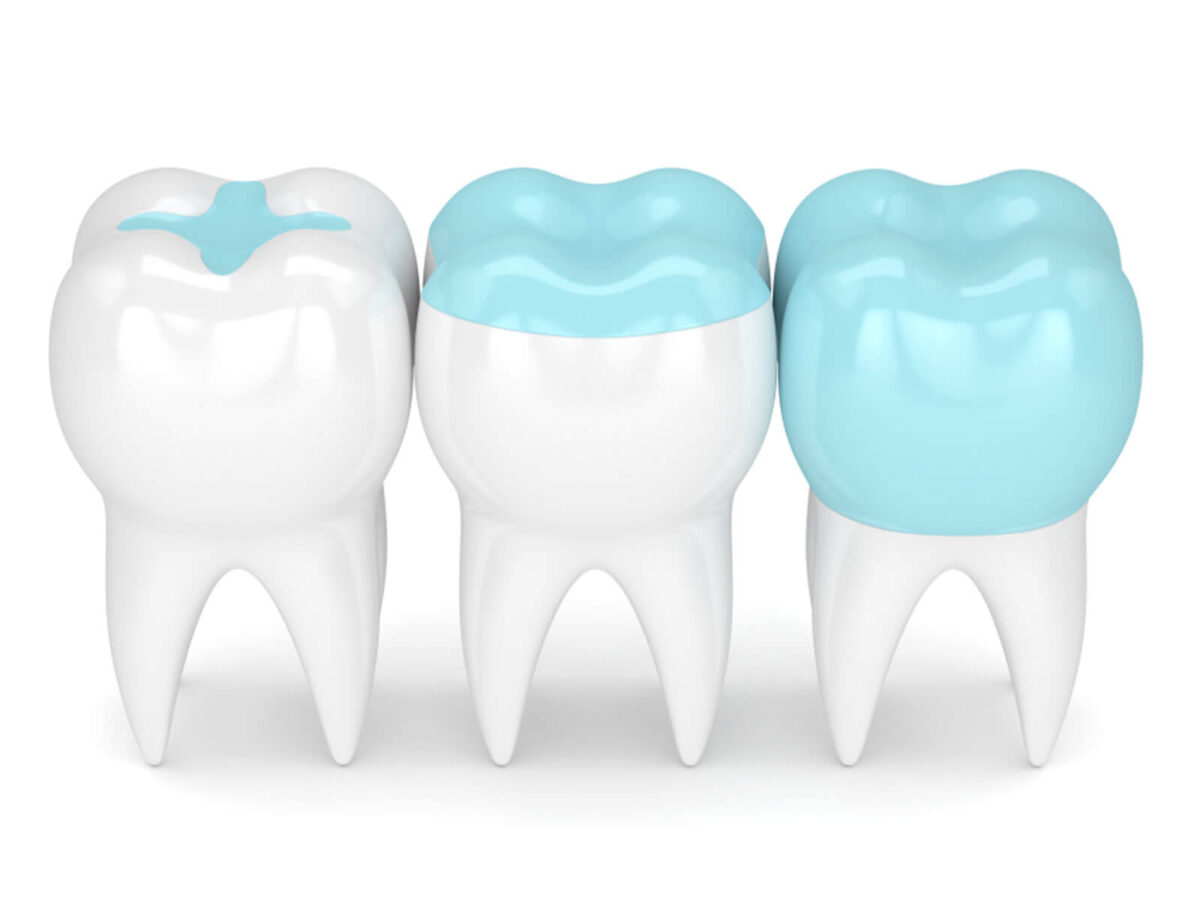
To understand “what are dental inlays”, it helps to picture the chewing surface of a tooth. That surface has grooves and pits. When damage stays within those grooves and hasn’t weakened the pointed edges, an inlay is often a good option.
An inlay sits within the tooth instead of covering it. It fixes damage while leaving the stronger parts untouched. That’s the key reason inlays exist. They allow dentists to fix what’s broken without removing extra enamel just to make a crown fit.
Inlays tend to come up when a filling would be too large, but a crown would feel excessive.
What Are Dental Onlays, And How Do They Come Into Play
Once damage reaches the chewing points of a tooth, things usually start to feel different. Those raised areas take most of the pressure when you eat, so when they are involved, a simple inlay may not hold up the way it once did. That is usually the point where questions like what are dental onlays start coming into the conversation.
An onlay is designed to cover the chewing surface along with one or more of those raised areas. It helps support the parts of the tooth that deal with pressure every single day. At the same time, it avoids covering the entire tooth as a full crown would. That smaller footprint helps preserve more of the original tooth underneath. This middle ground is why people tend to describe onlays as something between an inlay and a crown.
The Difference Between Inlay And Onlay In Real Terms
The difference between inlay and onlay isn’t about materials or appearance. It’s about how much of the tooth needs help. Inlays stay within the centre of the tooth. Onlays extend over the biting edges. That’s it. That single distinction drives the entire decision.
Cusps matter because they absorb force. If a cusp is weak and left unsupported, it can fracture later. An onlay exists to prevent that.
Why Dentists Don’t Always Choose Fillings Anymore
Large fillings can do their job, but they aren’t always kind to the tooth long-term. As fillings get bigger, the tooth has less natural structure left to support everyday chewing. Over time, that extra stress adds up. Back teeth feel it first because they’re doing most of the work.
Inlays and onlays are made to fit the tooth more closely. That tighter fit helps spread pressure instead of forcing it into thin edges. Because of that, dentists often think through inlay vs onlay instead of replacing a large filling again and crossing their fingers.
It’s not about doing more than necessary. It’s about choosing something that makes sense for how teeth actually wear down over time.
Why A Crown Isn’t Always The Best Answer
Crowns are strong, no question about that. They’ve been used for a long time, and in the right situation, they do their job well. The tradeoff is that a crown usually means removing a fair amount of natural tooth to make everything fit properly. Once that structure is gone, there’s no getting it back.
When the damage is limited to just part of the tooth, going straight to a crown can feel like more than what’s actually needed. Inlays and onlays take a different approach. They keep strong enamel untouched and work only on areas that truly need fixing. That conservative mindset is a big reason dentists often think through dental inlay vs onlay before deciding a full crown is the best move.
Materials And Why They Matter Less Than You Think
Most inlays and onlays are made from ceramic or porcelain these days. They’re strong, they look natural, and they hold up well when you’re chewing normally. For a lot of patients, that combination makes them an easy choice without much debate.
Gold hasn’t disappeared completely. It’s still used in some situations, especially for molars that need extra strength. Still, it’s not chosen as often now.
No matter the material, the difference between inlay and onlay stays the same. What defines each option is coverage, not what they’re made of.
What The Process Feels Like From A Patient’s Side
Getting an inlay or onlay usually takes more than one visit. The tooth is prepared. A scan or impression is taken. A temporary may be placed. The final piece is bonded later.
It’s not rushed. That slower pace often surprises people who expect a quick filling. The extra time exists because precision matters.
How Long Do Inlays And Onlays Tend To Last
Because inlays and onlays are custom-fit and bonded, they usually don’t behave like large fillings once pressure starts adding up. They tend to stay steadier. Less shifting, less strain on weak areas.
Still, how long it lasts depends on habits. Grinding and oral hygiene play a role too. That’s why night guards are sometimes suggested, not because something is wrong, but because prevention is easier than fixing damage again.
This idea of long-term reliability is why inlay vs onlay keeps coming up during treatment planning instead of being an afterthought.
Who Usually Benefits The Most
Teeth that are moderately damaged tend to benefit the most. Too damaged for fillings. Not damaged enough for crowns.
Dentists don’t apply the same answer to every tooth. They judge each situation on its own. That’s why two teeth in the same mouth can receive different recommendations.
What Inlays And Onlays Don’t Fix
These restorations don’t treat infection. They don’t replace missing teeth. They don’t address gum disease. Understanding those limits helps keep expectations realistic when discussing dental inlay vs onlay.
Why Timing Changes The Options
Damage spreads if it’s ignored. What starts as an inlay may later require an onlay. What could have been an onlay may eventually need a crown. Early care preserves choices. Delaying care narrows them.
Conclusion
So, inlay vs onlay isn’t about which one is better. It’s about how much of the tooth needs support and where that support is needed.
Inlays protect the inside. Onlays protect the biting edges. Both exist to save as many natural teeth as possible while still making the tooth functional again.

